Buyer's guide / Wire
Wire Gauge Chart: SWG, BWG and mm for GI, Binding and Fencing Wire
Convert SWG and BWG to millimetres, and see which gauge is used for binding wire, GI wire, barbed wire and mesh. A buyer's table from an Indore wire stockist.
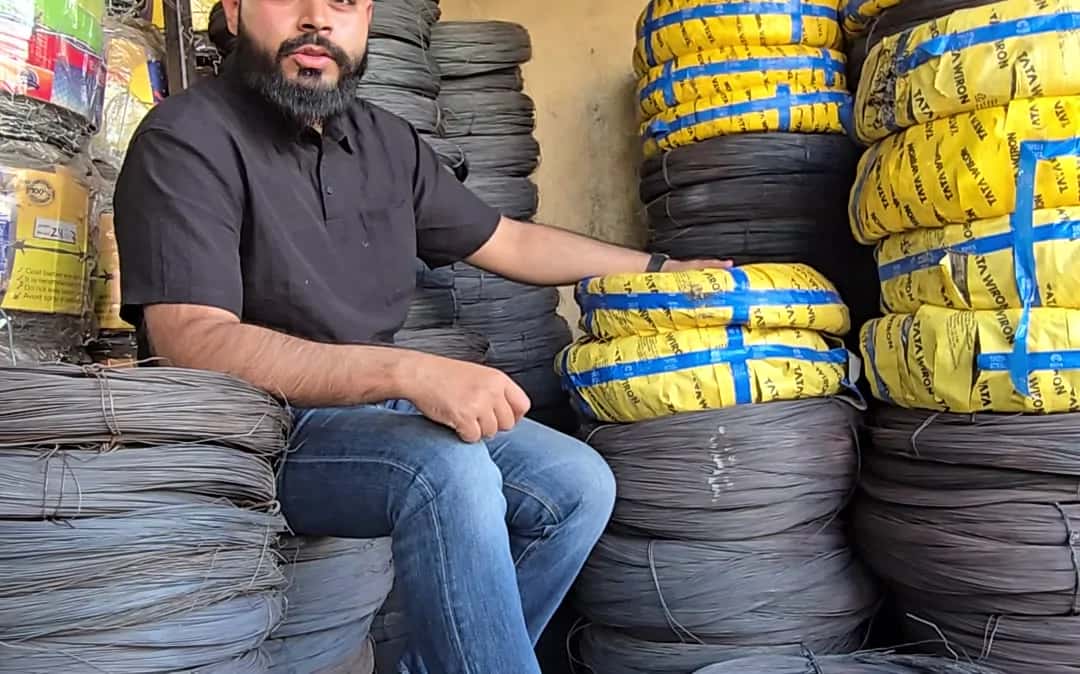
Published 4 min readHM Ibrahim & Co, Siyaganj, Indore, since 1939
Quick answer: A higher gauge number means thinner wire. 12 SWG is 2.64 mm, 14 SWG is 2.03 mm, 16 SWG is 1.63 mm and 18 SWG is 1.22 mm. Rebar tying uses 16 to 18 SWG annealed binding wire. Fence tying uses 12 to 14 SWG GI.
You ask for 12 gauge wire. The shop hands you a coil. How do you know it is the 12 gauge you meant?
Because two gauge systems are in use in India, "12 gauge" can mean two different thicknesses. Add the fact that a bigger gauge number means a thinner wire, and you can see where mistakes begin.
The rule that confuses everyone
The higher the gauge number, the thinner the wire. 8 gauge is thick fencing wire. 20 gauge is thin tie wire.

SWG and BWG in millimetres
India mainly uses SWG (Standard Wire Gauge, also called Imperial). BWG (Birmingham Wire Gauge) appears on some tube and steel wire specs. They are close but not the same.
| Gauge | SWG (mm) | BWG (mm) |
|---|---|---|
| 6 | 4.88 | 5.16 |
| 8 | 4.06 | 4.19 |
| 10 | 3.25 | 3.40 |
| 12 | 2.64 | 2.77 |
| 14 | 2.03 | 2.11 |
| 16 | 1.63 | 1.65 |
| 18 | 1.22 | 1.24 |
| 20 | 0.91 | 0.89 |
| 22 | 0.71 | 0.71 |
Always confirm which gauge system your supplier uses, or ask for the diameter in millimetres. Our product pages use SWG unless a line says BWG or gives millimetres; barbed wire is written "12 x 14" for line wire × barb wire, both in SWG. A micrometer or vernier caliper settles it in seconds.
What gauge for what job
| Job | Common choice |
|---|---|
| Rebar tying (binding wire) | 16 to 18 SWG, annealed |
| Compound wall and fence tying | 12 to 14 SWG GI |
| Chain link tension wire | 8 to 10 SWG GI |
| Barbed wire | 12 to 14 SWG, two strands twisted |
| Jhatka machine wire | 12 to 14 SWG high tensile |
| Binding for mesh and cages | 18 to 20 SWG |
These are the usual ranges for tying and fencing. They are not load ratings: wire is not a substitute for a rated hanging, lifting or tie-down assembly, and a designer or the project specification can ask for something different.
GI, black and annealed: what the finish means
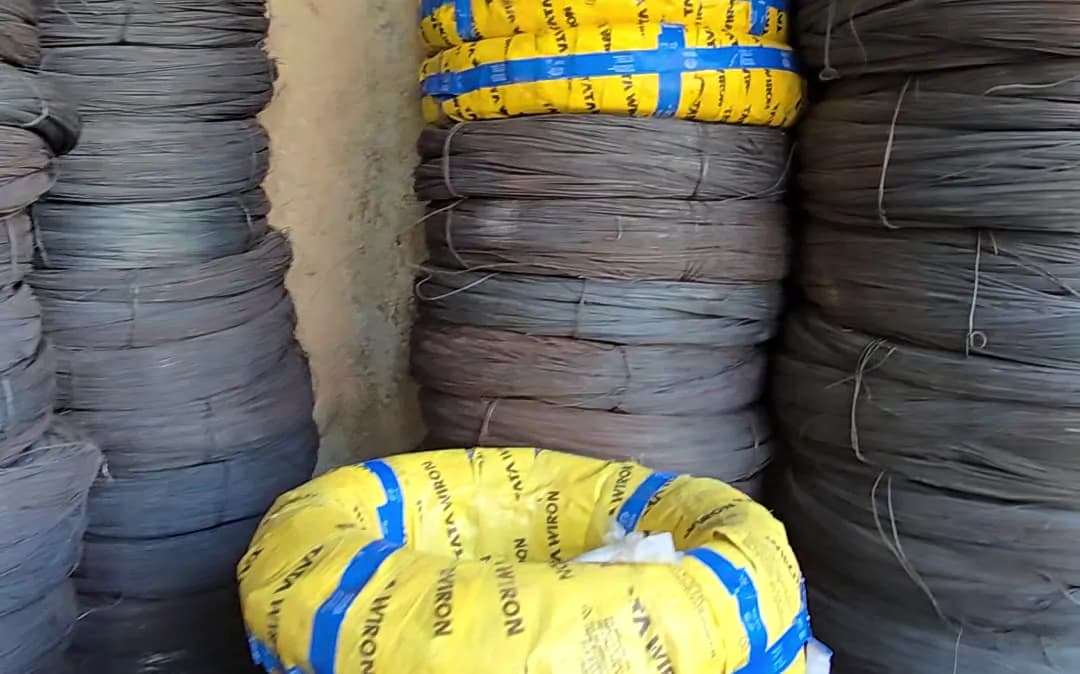
- GI (galvanised) wire has a zinc coating. It lasts outdoors. See GI wire.
- Black annealed wire is soft, dark and easy to twist. It is the standard binding wire for rebar. See binding wire.
- High tensile wire is hard and springy. It is used for jhatka and tension lines, not tying.
Annealing is the heat treatment that makes the wire soft. A coil that feels stiff and springy is not binding wire however it is labelled.
How to check a coil
- Measure the diameter with a caliper in two places along a straight length.
- Pull a short piece to bend it. Binding wire should twist cleanly without snapping.
- Look at the coating on GI wire. Zinc should be smooth and even, not flaky.
- Check the weight against the label. A coil short by a few kg is a short coil.
Weight of wire per metre
Steel wire is a solid cylinder, so the same rule as for rebar applies: weight per metre is about d² ÷ 162 kg, where d is in millimetres. For 2.64 mm (12 SWG) that is about 0.043 kg per metre, so one kg is roughly 23 metres.
That means a 25 kg coil of 12 SWG wire holds about 575 metres. Use that when you compare coils from different suppliers. A galvanised coat adds a little.
Tell us the job, not just the number
If you do not know the gauge, say what the wire is for. We will pick the diameter for you. Or send a short cut piece and we will match it.
See wires for the full range.
FAQs
What is 12 gauge wire in mm?
2.64 mm in SWG and 2.77 mm in BWG.
Is 16 gauge or 18 gauge binding wire better?
Both work. 16 gauge is stronger and 18 gauge is easier to twist by hand. Many sites use 18 gauge for small bars.
What gauge is barbed wire?
Typically 12 to 14 gauge, in two strands twisted together with barbs.
What is the difference between SWG and BWG?
They are two different measuring systems with slightly different diameters at each number. SWG is more common in India for wire.
How much binding wire do I need per tonne of steel?
Sites commonly budget about 8 to 10 kg per tonne of rebar. Your engineer's bar schedule decides the real number.
The table and the formula were recalculated and compared with our product list on 12 October 2026. This is a catalogue check, not an independent technical review.
From the shelf
 GI WireGalvanised iron wire for binding, fencing, and general use. Tata Wiron available.Ask for rate
 Binding WireAnnealed binding wire for RCC work.Ask for rate
 Jhatka WireJhatka machine wire for fencing and agricultural use; quality wire for boundaries and farm applications.Ask for rate
 Clutch WireClutch wire for automotive and machinery applications; supplied in spools.Ask for rate
Keep reading
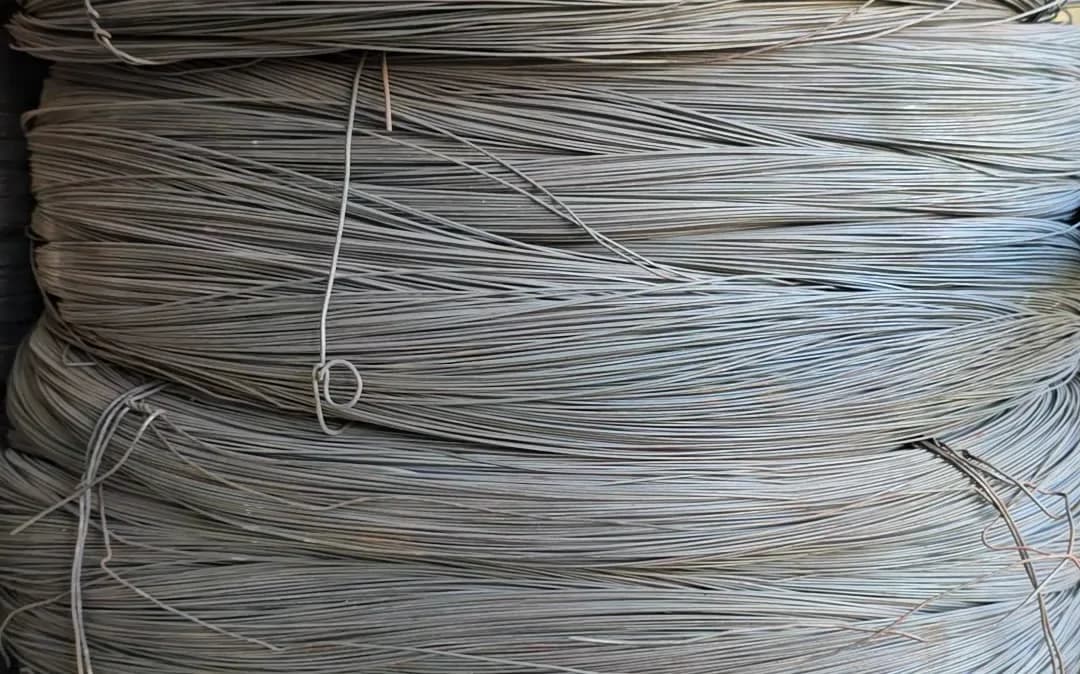 GI Wire vs MS Wire: Which One for Binding and Fencing?GI wire or MS wire? Which to use for rebar binding and which for fencing in Indore, how they differ in durability and price, and what we stock in Siyaganj.3 min readRead
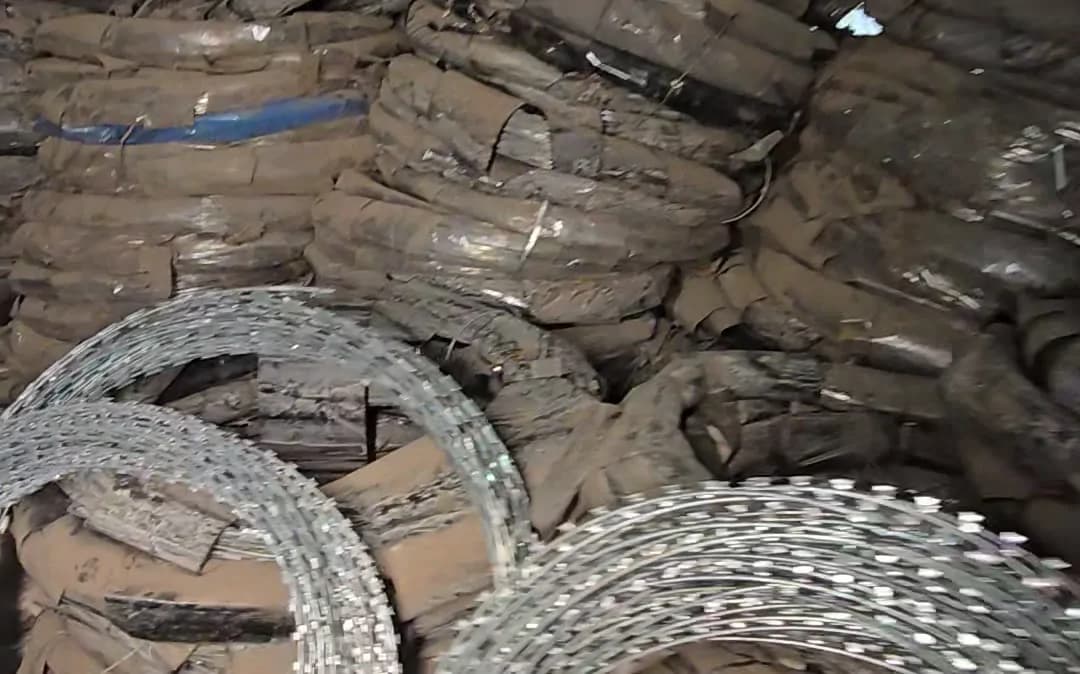 Barbed Wire vs Concertina Wire: Which Is Better for Fencing?Barbed wire or concertina wire for your boundary? How they differ in security, cost and installation, and where to buy both in Siyaganj, Indore.3 min readRead
 TMT Bar Weight Chart: 6–32 mm, and How to Check a DeliveryTMT bar weight per metre and per piece for every common diameter, the formula behind it, and how to check a delivery against the paperwork. From the counter at Siyaganj, Indore.5 min readRead
Ask the counter
Send the product, size and quantity. We confirm stock and call back with the rate.