Buyer's guide / Mesh and nets
Fibre Mesh for Plaster: Control Cracks Where Brick Meets Concrete
Why plaster cracks along beams and columns, and how fibreglass mesh tape can help control it. Width, where to fix it and how to apply it. From an Indore mesh stockist.
Published 3 min readHM Ibrahim & Co, Siyaganj, Indore, since 1939
Look at the plaster on any building in Indore. Find the line where a brick wall meets a concrete beam or column. If there is a hairline crack running along it, you have found the most common plaster fault there is.
It is not bad workmanship. It is physics. A strip of fibre mesh, specified and fixed properly, can help control it.
Why the crack appears
Brick and concrete expand and shrink at different rates with heat and damp. Where they meet, they move against each other. Plaster that bridges the joint is stretched, and it cracks along the line.
The crack repeats on every joint in the building, which is why it looks so systematic.
What fibre mesh does
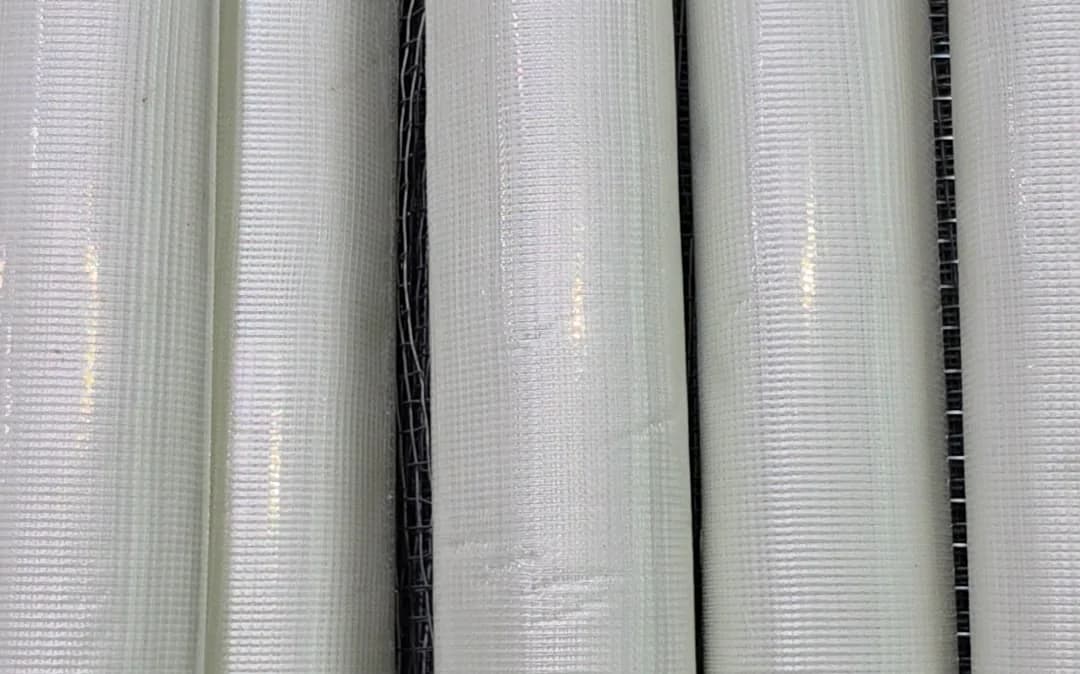
Fibre mesh is a net of glass fibre coated to resist the alkali in cement. Embedded in the plaster, it spreads the stress over a wider strip so no single line takes the full pull. The plaster still moves, but the mesh can help keep that movement from opening into a visible crack.
Where to use it
- At brick and concrete joints: beams, columns, slab edges.
- Over conduit and pipe chases that have been cut and filled.
- At corners of windows and doors, where diagonal cracks start.
- Over whole walls in thin plaster, in the form of a wide mesh.
- On ceilings where hairline cracks appear after the pour.
Which width
| Width | Typical use |
|---|---|
| 4 inch | Narrow joints between brick and concrete |
| 6 inch | Beam and column joints, most common |
| 8 inch | Wide chases and corner reinforcement |
| 1 metre | Full wall or ceiling reinforcement |
How to apply
- Clean the joint and wet the surface.
- Apply the first coat of plaster, about two-thirds of the final thickness.
- Press the mesh into the wet plaster, centred on the joint, with at least 2 inches of overlap on each side.
- Cover it with the second coat so the mesh is fully buried.
- Finish the surface in the normal way.
Do not leave the mesh on the surface. A mesh that sits on top of the plaster does nothing and shows through the paint.
Self-adhesive tape or plain mesh
- Self-adhesive tape is quick for dry joints and for plasterboard. It sticks to the wall.
- Plain mesh is pressed into wet plaster and is the choice for sand-cement plaster.
For brick and concrete in Indore, plain alkali-resistant mesh in plaster is the usual choice.
Quality check
- GSM: heavier mesh, such as 145 gsm, is stronger than 45 gsm. Ask for the weight per square metre.
- Alkali resistant coating: a mesh without it breaks down in cement within a few years.
- Weave: even and tight, not loose.
See fibre mesh for the widths in stock.
FAQs
Does fibre mesh stop all plaster cracks?
No. It can help control cracking when specified and installed appropriately. It does not eliminate every joint-movement crack, and it does not fix structural movement or a poor plaster mix.
What width fibre mesh for a beam?
6 inch is the usual width, with 8 inch for wide joints.
Is fibre mesh the same as wire mesh?
No. Fibre mesh is glass fibre, light and rust free. Wire mesh is steel and used for heavier plastering such as chicken mesh on timber.
Can fibre mesh be used outdoors?
Yes, alkali resistant mesh embedded in cement plaster is used on external walls.
How much fibre mesh do I need?
Measure the total length of beam, column and chase joints. Add 10% for overlap.
From the shelf
 FibermeshFibreglass reinforcement mesh for plaster, render and construction, to resist cracking.Ask for rate
 MS AnglesMild steel angles in various sizes for fabrication and structural use.Ask for rate
 MS Flat BarsMild steel flat bars for welding and fabrication.Ask for rate
 Bright BarsCold-drawn bright bars for precision applications.Ask for rate
Keep reading
 Expanded Metal Mesh (Jali): What It Is, Where It Goes and How to OrderExpanded metal mesh is cut and stretched from a single steel sheet. See the uses for gates, grills, plaster, stairs and cable trays and how to specify it.3 min readRead
 Mosquito Net for Windows in Indore: Fibreglass, SS, Aluminium or GI?Which mosquito mesh suits which window? Mesh count, wire gauge, rust, sun and rain compared, with a buying checklist from a Siyaganj mesh counter.4 min readRead
 Wire Mesh Supplier in Indore: Types, Uses, Price FactorsWire mesh types in Indore (MS, GI, welded and crimp), what each is used for and what moves the price. From a Siyaganj stockist.4 min readRead
Ask the counter
Send the product, size and quantity. We confirm stock and call back with the rate.